Bby Wow Guy Pet Dance: Make Your Dog or Cat Join the Party
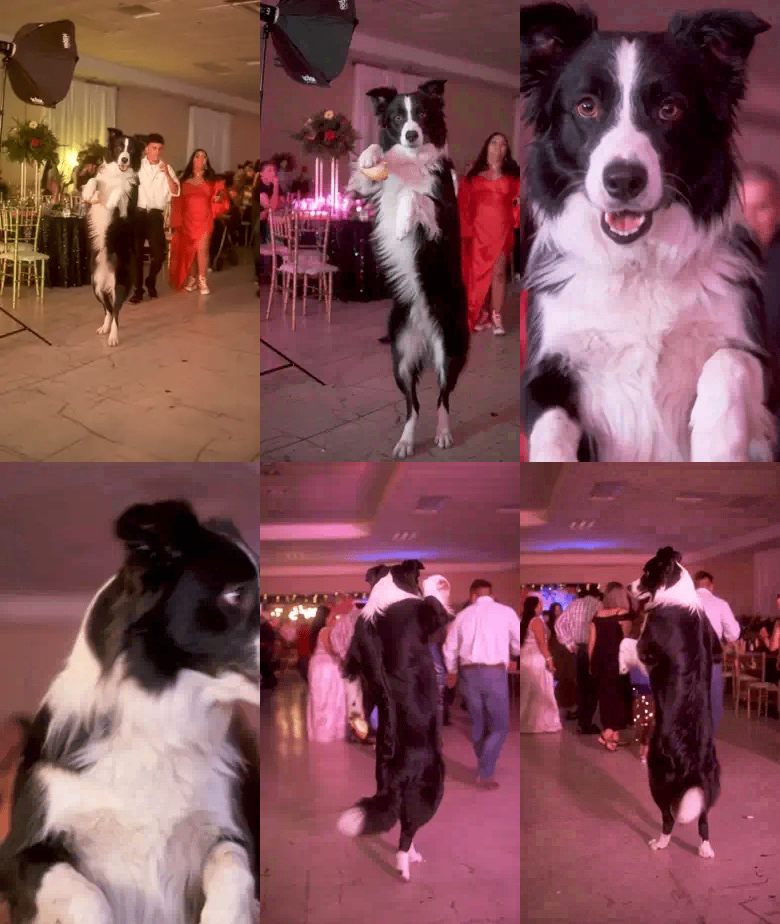
A Border Collie hops out of a party crowd, approaches the camera with a bread roll, takes a bite, stares at you, then turns and dances back. Its serious party face is funnier than an elaborate routine.
That is the scene in ZOOOP's Bby Wow Guy template. Upload one photo to try putting your own dog or cat in the lead. This pet dance guide uses our approved Collie and orange tabby clips to explain the results, photo selection, and body details worth checking before you share.
Which sequence does this template recreate?
The distinctive moment is the bread bite at the party. The lead approaches, brings food to its mouth, pauses for a stare, then turns away into the crowd. Close-ups show expression; wider shots reveal the whole body. Both matter.
The joke in this pet dance is seeing a familiar animal take the lead. It keeps furry paws, hind legs, and a tail while joining the party upright. That is the sequence shown here. A clip of two people dancing side by side without the bread bite and turn is a different routine, so do not use it to judge these movements.
The finished clip is about ten seconds. Watch all of it before deciding whether to shorten it for sharing. A cute face close-up can distract you from problems in the later back view.
See the Border Collie and tabby results
The Collie's black-and-white coat makes its identity easy to follow. Its white chest, black back, and tail remain recognizable as it hops forward, lifts the bread, and turns away on its hind legs. This pet dance has lively movement, though the torso looks longer than a typical Collie's and the cheek puff is subtle.
The orange tabby looks like a cat taking its party invitation seriously. Its stern approach and pause at the camera make the joke. Both clips keep the approach, eating, stare, and return in order, but the food shape and chewing expression differ.
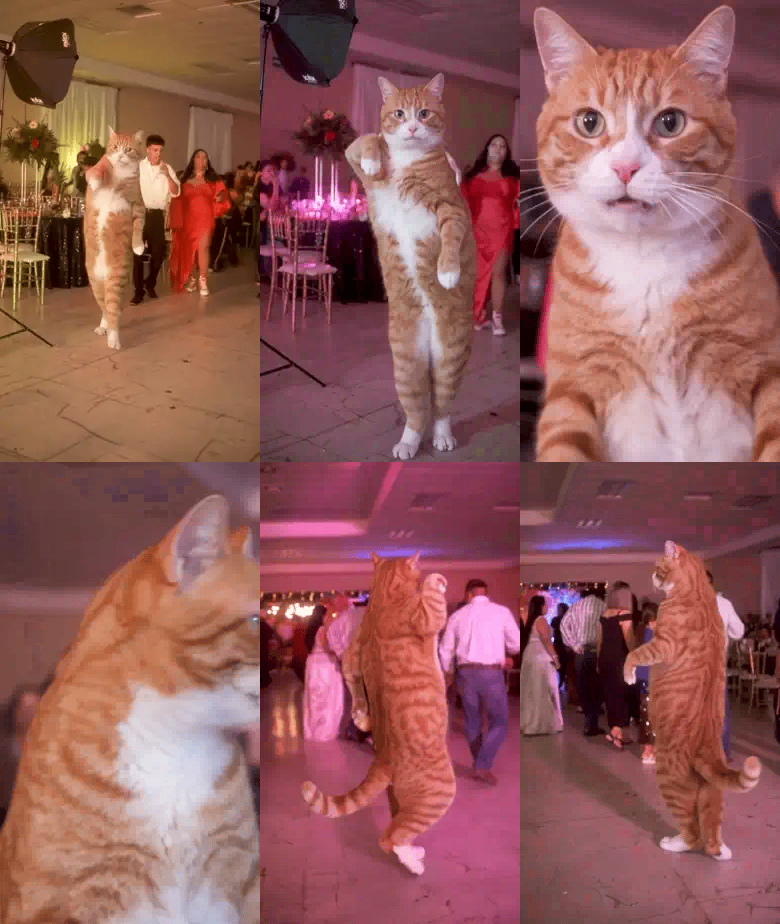
These are selected results, not a promise that another photo will produce identical details. When choosing a pet dance clip, check whether the animal still looks like yours, then examine the paws, food, and turn. One adorable frame is not enough.
Choose a photo with the whole body visible
Start with one pet, a clear outline, and even lighting. Keep the ears, top of the head, chest, and limbs inside the frame where possible. Avoid another animal crowded into the background. A readable photo makes unexpected changes easier to spot.
Our Collie reference shows its full body upright on its hind paws, with its front paws raised. For a similar pet dance pose, use an existing photo with a clear body if you have one; do not force a pet to stand for a picture. Deep cushions, a blanket covering the lower body, or a tightly cropped headshot provide less body information.
Watch for a person's arms across the pet's chest, clothing covering its shoulders and back, or paws overlapping a table edge. Those shapes can confuse the outline. Keep the recognizable coat and facial features so friends can immediately tell whose pet is dancing.
Generate the clip in ZOOOP
Open the template, upload one clear photo, choose an available resolution, then review the estimated usage before submitting. The scene and actions are preset; you do not need to write a long choreography description. Results vary, so a lower-resolution first attempt can help you assess the effect.
Play the complete result before trimming. Check the arrival, approach, eating, and turn, then look more closely at the body. Explore the template library for other routines, or use AI video generation to design your own scene.
Higher resolution does not guarantee better anatomy. A pet dance can be spoiled by a paw becoming a human hand or clothing appearing after a turn. If that happens, try another photo or generate a new result.
Check the paws and back before publishing
Our first Golden Retriever attempt had exactly that problem: a dog from the front, human arms beside its shoulders, and a white-shirted human back after the turn. A cute face did not make it a usable example. We checked the replacement Collie closely at those same moments.
Review your pet dance at three points:
- On the approach: do the front paws connect to the animal's own shoulders, with no extra hands or sleeves?
- During the bite: do the mouth, paws, and bread merge, or do fingers suddenly appear?
- On the return: does the back remain furry, with the tail and hind legs intact, and without a second pet appearing nearby?
Party guests remain in the background. You are checking the lead animal's continuity, not treating every background person as a mistake. Watching the complete clip is more reliable than judging a polished screenshot.
Pick the result, then decide how to share it
Keep the close-up stare if the expression is your favorite part. Keep the beginning and the turn if you prefer the upright steps. Cutting the ending too soon loses the approach-and-return rhythm.
The selected Collie fixed the human-body remnants we saw, but its proportions remain elongated. The tabby's cheek puff is also understated. You may enjoy the exaggeration or prioritize proportions on your next attempt. A pet dance works through familiar expressions and unexpected movement; every detail need not match the example.
When your photo is ready, try the Bby Wow Guy pet dance template. Check the whole body first, then choose your favorite expression.